Social impact travel means your trip leaves something good behind for the people who live where you travel. In Nepal, that phrase is everywhere, so it is fair to ask: what does my trek actually pay for?
We are Makalu Arun Social Trek (MAST), a local trekking agency in Khandbari, eastern Nepal. We were set up in 2010 by SESF (Sankhuwasabha Education Scholarship Foundation), a Khandbari organisation that has helped local children get an education since 1997. We pay no profit to owners, so our treks exist to fund that work.
This post shows the real results of a trek with us: who benefits, and what changes. For the cost side, line by line, read Where Your Trekking Money Goes.
What your trek funds, at a glance
A trek with MAST supports five things in Sankhuwasabha, the district where we live and work.
| What your trek funds | Who benefits | The result |
|---|---|---|
| School supplies and scholarships | Children from the poorest families | 6,000 children supported across 15 schools |
| Food for elders | Residents of Manakamana Elderly Home, Khandbari | 35+ elderly people with regular food deliveries |
| Fair jobs | Porter-guides from Seduwa and Tashigaon | Paid, insured work close to home |
| Village income | Families who run tea houses on the trail | Money paid to them directly, every night |
| Protected forests | Makalu Barun National Park and its buffer-zone villages | Park fees that partly return to local communities |
1. Children in school
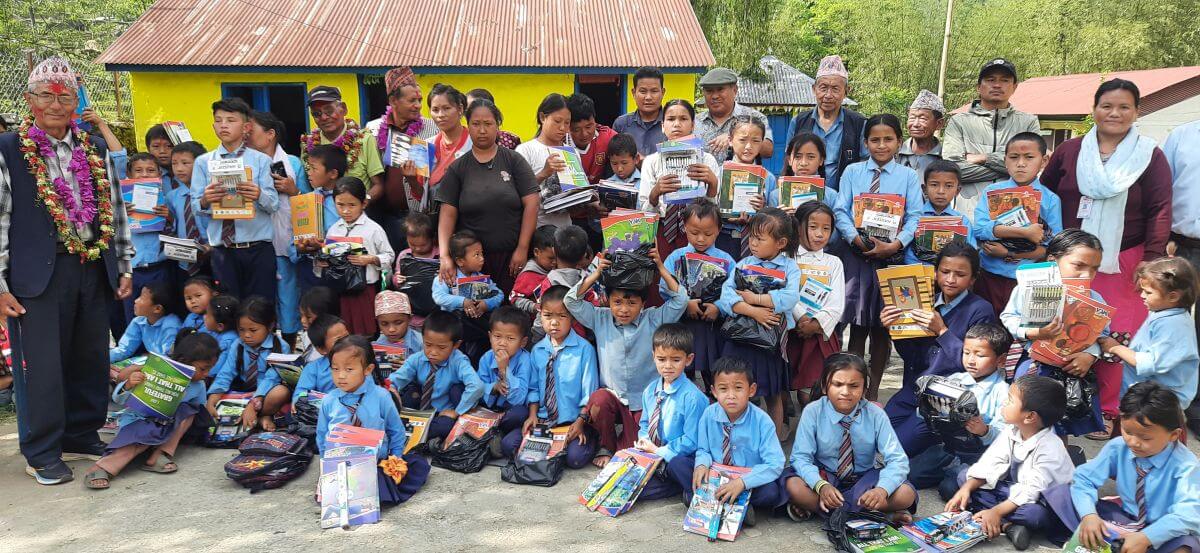
In rural Sankhuwasabha, many families can’t afford the basics a child needs for school. A missing notebook, uniform or pair of shoes is often the reason a child falls behind or stays at home.
Your trek helps SESF and MAST provide:
- School supply kits: notebooks, pens, pencils, bags and stationery for local government schools
- Uniforms and winter clothing, so children can attend through the cold months
- Scholarships for orphaned and underprivileged children, with priority for those who have lost a parent’s support
- Sports equipment such as volleyballs, footballs and nets
So far, this work has supported around 6,000 children across 15 schools in Sankhuwasabha. Supplies are bought in Khandbari, so local shops benefit too.
You can follow this project, or give to it directly, on GlobalGiving.
2. Elders with enough to eat
Manakamana Elderly Home in Khandbari is home to 35 elderly people, almost all women between 60 and 90. Many came from distant villages after family difficulties. The home has long relied on small donations from visitors to the nearby temple, which are often not enough to buy food.
Your trek helps pay for regular deliveries of rice, lentils, oil and fresh produce to the home. It is simple support, and it gives the residents a steady source of food they can count on.
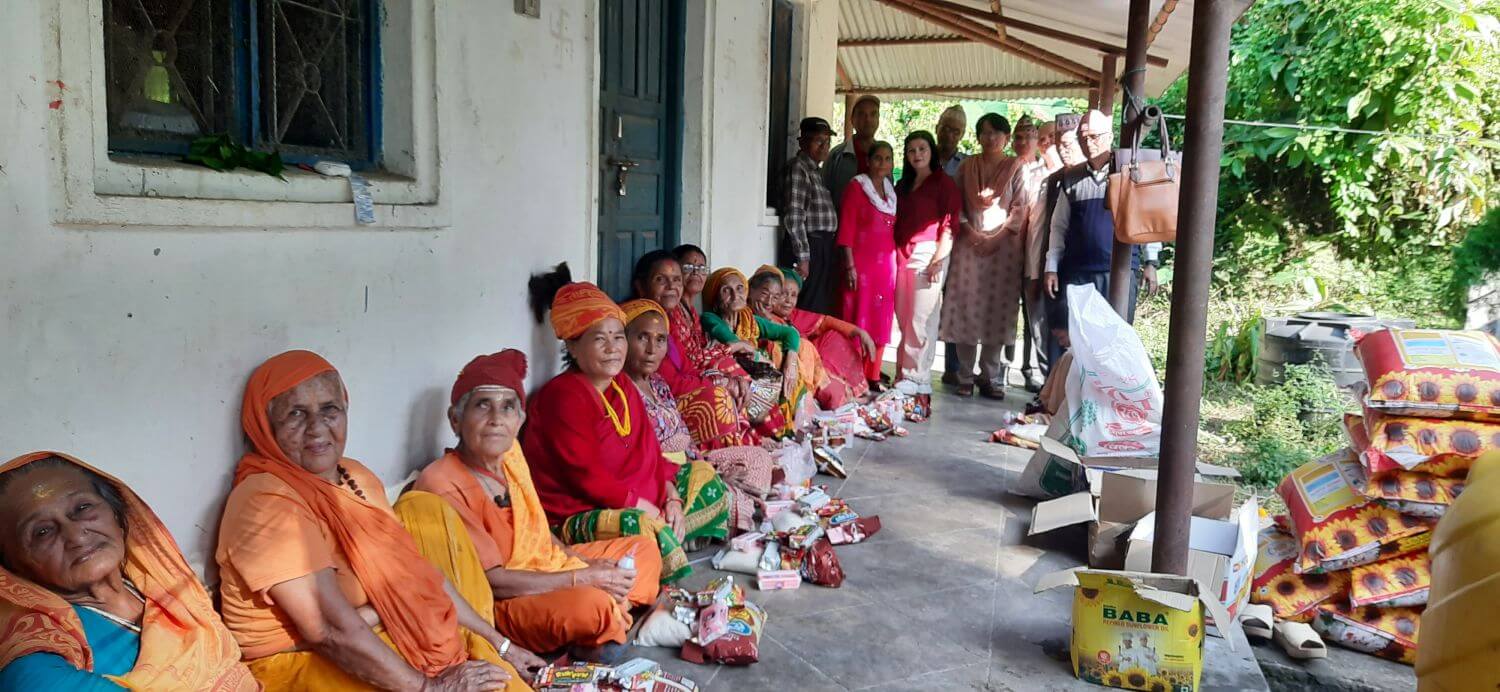
This project is also on GlobalGiving, and you can visit the home with our team after your trek.
3. Fair jobs in the mountains
Many young people in remote Sankhuwasabha leave home to find work in cities or abroad. Trekking work lets some of them earn a living without leaving their villages.
All our porter-guides come from villages on the Makalu trail, mostly Seduwa and Tashigaon. They know every lodge owner, every shortcut and every change in the weather. Your trek gives them:
- A daily wage, with their food and lodging covered
- Insurance for every trek
- Shoes, socks and gloves for the trail
- Tips from guests, which go straight to them
Guests often tell us their porter-guide was the highlight of the trek. Some have even stayed at their guide’s family home, which says a lot about the relationship.
4. Income for trail villages
On the Makalu trail, tea houses are run by local families, often the same extended families from Seduwa and Tashigaon. In villages with few other ways to earn money, trekkers are an important source of cash income.
We don’t include trail food and rooms in our price. You pay each tea house yourself, so the family gets the full price, the same day. On our 18-day trek, that comes to about NPR 70,000 per person going straight to these families.
Your money also reaches beyond the lodges: to farmers who grow the vegetables, porters who carry supplies up the trail and shops in Khandbari where we buy gear and school supplies.
5. Protected forests and wildlife
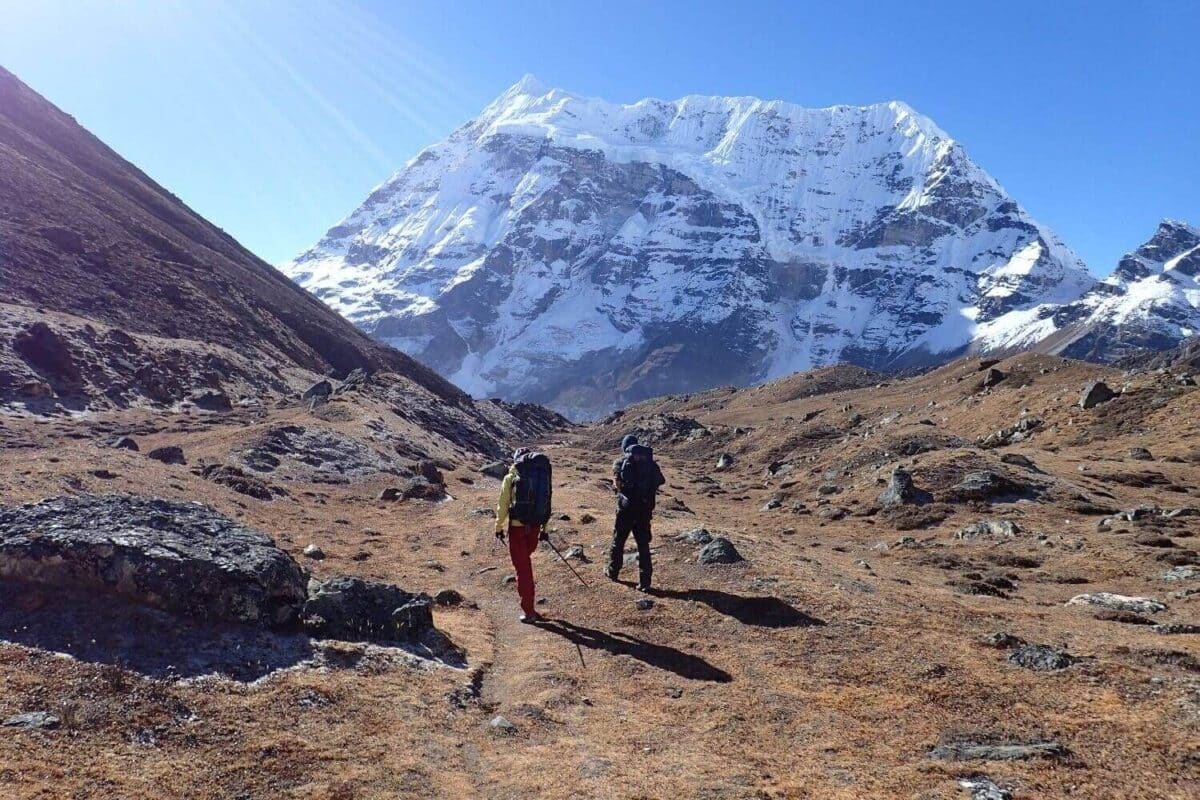
The Makalu trek runs through Makalu Barun National Park, created in 1992 and covering about 1,500 km². The park is home to 431 bird species, red pandas and rare medicinal plants.
Every foreign trekker pays a park entry fee of NPR 3,000 plus VAT, and it is included in our price. According to the park’s own brochure, 30–50% of that revenue goes back to communities in the park’s buffer zone. So part of your fee goes to the villages around the park, giving them a stake in protecting it.
What we don’t claim
Social impact travel is easy to oversell, so here is what a trek with us does not do.
- It doesn’t make trekking impact-free. Flights, jeep rides and more visitors all have a cost to the mountains. We keep groups small (1–6 trekkers), and the tips below help reduce your footprint.
- It doesn’t replace local people. You won’t teach a class or run a project. Teachers, health staff and our team in Khandbari do that work; your trek pays for the tools they need.
- It doesn’t fix everything. School supplies and food deliveries are small, steady help, not a solution to poverty. We would rather promise less and show you exactly what happens.
If you want to see the work for yourself, you can visit a school or the elderly home with our team. Read how volunteering while trekking works.
How to make your trek count for more
A few simple choices make a big difference to who benefits from your trek.
- Choose a local agency based near your trailhead, with guides from local villages.
- Eat and sleep at family-run tea houses, and pay them directly.
- Eat local food. Dal bhat is grown and cooked nearby; imported snacks are carried up on someone’s back.
- Buy local products, such as allo (nettle-fibre) cloth or rudraksha beads in Khandbari. See our local products.
- Tip your porter-guide fairly at the end of the trek.
- Carry out your rubbish, especially plastic bottles and batteries, and use a water filter instead of buying bottled water.
- Visit a project with our team, and see where the money goes.
Social impact travel in Nepal: FAQs
What is social impact travel?
Travel planned so that local people benefit directly: local guides, family-run accommodation, and part of the money going to community projects.
How does a trek with MAST help local communities?
It pays fair, insured wages to local porter-guides, puts money straight into tea-house families’ hands, and funds school supplies, scholarships and food for an elderly home in Sankhuwasabha.
Who is SESF?
The Sankhuwasabha Education Scholarship Foundation, a Khandbari organisation helping local children get an education since 1997. SESF set up MAST in 2010.
Can I see the projects?
Yes. You can visit a school or Manakamana Elderly Home with our team in Khandbari after your trek.
Can I donate without trekking?
Yes, through our donate page or our projects on GlobalGiving.
Trek with purpose
Choose a trek, and we’ll plan it with you from Khandbari, with a local porter-guide and your money staying in the valleys you walk through.
- Read our Makalu Base Camp Trek Guide 2026
- See where your trekking money goes
- Browse all our trekking packages
- Contact us through our contact page, on WhatsApp at +977 9861714199, or at [email protected]