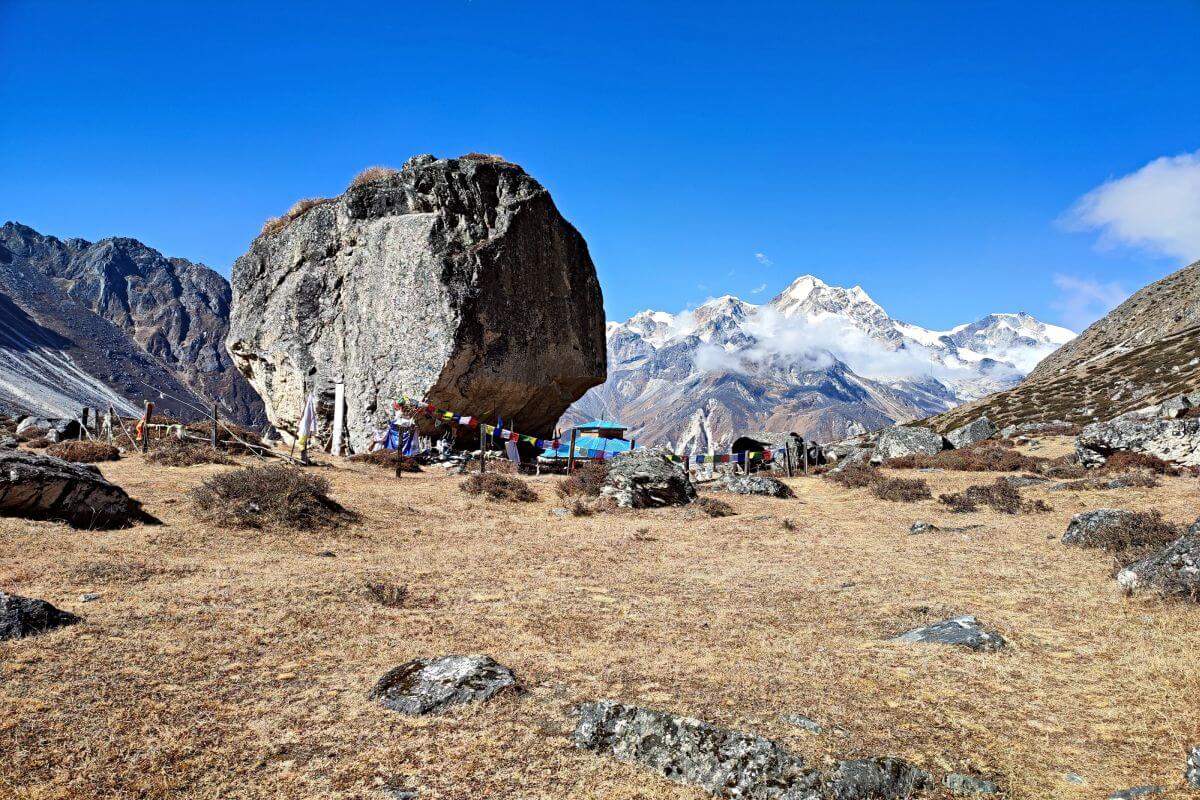
Kanchenjunga region · Tea house trek
Kanchenjunga Circuit Trek (North & South Base Camp)
- Trek
- Kanchenjunga Circuit Trek (North & South Base Camp)
- Trek type
- Tea House Trek
- Duration
- 20 days
- Program starts/ends
- Bhadrapur
- Trek difficulty
- Strenuous
- Maximum elevation
- 5,143 m
- Walking duration
- 5–6 hours
- Group size
- 1–6 people
- Best season
- Mar–May · Oct–Nov
- Accommodation
- Tea house and lodge
- Transportation
- Flight, reserved jeep and public bus
- Permits
- Restricted Area Permit (RAP), Kanchenjunga Conservation Area Project (KCAP) Permit and TIMS card
From $1,975 for 1 Trekker
Book this trekOverview
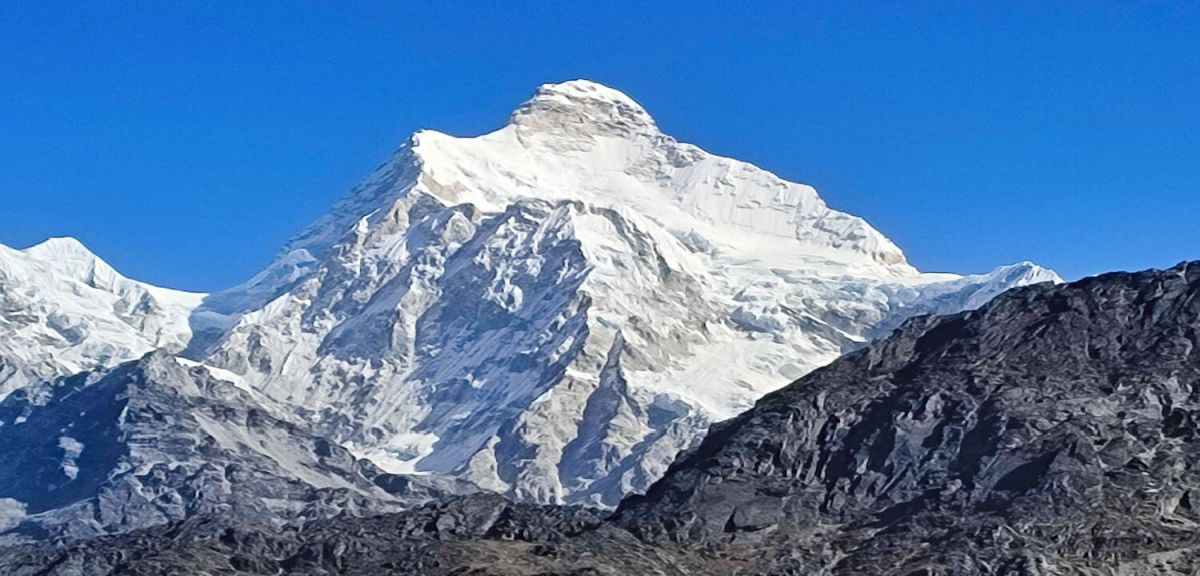
The Kanchenjunga Circuit Trek takes you to both base camps of Kanchenjunga (8,586 m), the world’s third-highest mountain, in the far east of Nepal. It is one of the country’s great wilderness treks: long, remote and far from the crowds of Everest and Annapurna.
After a flight to Bhadrapur and a two-day drive to the Tamor River, you walk up through subtropical valleys, bamboo and rhododendron forests and Sherpa and Tibetan villages to Ghunsa. From there you climb past Khambachen and Lhonak to Pangpema, the North Base Camp (5,143 m), beneath the vast north face of Kanchenjunga.
Returning to Ghunsa, you cross the high Sele Le, Mirgin La and Sinion La passes, with views as far as Makalu and Everest, to reach Tseram and the Oktang viewpoint at the South Base Camp. You then descend through Tortong and Yamphudin, through terraced farmland, to the road.
Kanchenjunga is a restricted area, so you need a special permit and a licensed guide. We arrange all permits for you. You trek with a licensed guide and a porter who carries your main luggage.
The Kanchenjunga Circuit Trek is one of Nepal’s hardest treks, like the Makalu Base Camp Trek, but its wild beauty makes every step worth it.
Related: the Lumba Sumba Pass Trek connects Kanchenjunga with the Makalu region, and our guide to Makalu trek difficulty compares the two base camp treks. See all our high-altitude treks.
Highlights
- Stand at both Kanchenjunga base camps: Pangpema (5,143 m) in the north and the Oktang viewpoint in the south
- See the Kanchenjunga and Yalung glaciers and peaks such as Jannu (Kumbhakarna, 7,710 m) and Kabru
- Cross three high passes (Sele Le, Mirgin La and Sinion La) with views to Makalu and Everest
- Walk through remarkable wildlife habitat: home to snow leopards, red pandas, musk deer, blue sheep and Himalayan black bears
- Visit Sherpa, Tibetan and Limbu villages such as Ghunsa, Gyabla and Yamphudin
- Real wilderness: very few trekkers, even in peak season
Itinerary
A. Outline Itinerary
- Day 2 1,442m
- Day 5 2,725m
- Day 8 4,150m
- Day 10 4,790m
- Day 11 4,790m
- Day 14 3,870m
- Day 17 1,692m
| Day | Description | Altitude (m) | Net Gain/Loss (m) | Duration (hours) | O/N |
|---|---|---|---|---|---|
| 1 | Fly from Kathmandu to Bhadrapur | 90 | - | 45 min flight | Hotel |
| 2 | Drive from Bhadrapur to Taplejung | 1442 | +1352 | 6-8 by jeep | Hotel |
| 3 | Drive to the Tamor River, trek to Sekathum | 1650 | +208 | 6-8 in total | Tea house |
| 4 | Trek from Sekathum to Amjilosa | 2498 | +848 | 5-6 | Tea house |
| 5 | Trek from Amjilosa to Gyabla | 2725 | +227 | 4-5 | Tea house |
| 6 | Trek from Gyabla to Ghunsa | 3415 | +690 | 5 | Tea house |
| 7 | Acclimatization day at Ghunsa | 3415 | 0 | - | Tea house |
| 8 | Trek from Ghunsa to Khambachen | 4150 | +735 | 5-6 | Tea house |
| 9 | Acclimatization day at Khambachen (optional hike towards Jannu Base Camp) | 4150 | 0 | - | Tea house |
| 10 | Trek from Khambachen to Lhonak | 4790 | +640 | 4-5 | Tea house |
| 11 | Trek from Lhonak to Pangpema (5,143 m), Kanchenjunga North Base Camp, and back to Lhonak | 4790 | +353 / -353 | 6-7 | Tea house |
| 12 | Trek from Lhonak to Ghunsa | 3415 | -1375 | 7-8 | Tea house |
| 13 | Trek from Ghunsa to Sele Le | 4480 | +1065 | 3-5 | Lodge |
| 14 | Trek from Sele Le to Tseram over Sele Le, Mirgin La and Sinion La | 3870 | -610 | 4-6 | Tea house |
| 15 | Trek from Tseram to Oktang (South Base Camp), back to Ramche | 4620 | +750 | 6-7 | Tea house |
| 16 | Trek from Ramche to Tortong | 2990 | -1630 | 5-6 | Tea house |
| 17 | Trek from Tortong to Yamphudin | 1692 | -1298 | 6-7 | Tea house |
| 18 | Trek from Yamphudin to Phumphe Danda | - | - | 6-7 | Tea house |
| 19 | Trek to the road head, drive to Bhadrapur | 90 | - | 6-8 in total | Hotel |
| 20 | Fly from Bhadrapur to Kathmandu | - | - | 45 min flight | - |
B. Detailed Itinerary
Take the morning flight from Kathmandu to Bhadrapur (about 45 minutes). Our team meets you at the airport and takes you to your hotel. Meet your guide and porter and prepare for the drive to Taplejung.
After breakfast, a reserved jeep takes you through the tea gardens of Ilam, past Charali and Phidim, to Taplejung (6–8 hours). Overnight in a hotel.
Drive by reserved jeep to the Tamor River bridge, cross the suspension bridge and start walking along the river to Sekathum. Overnight in a tea house.
After a few ups and downs along the river, climb stone steps above a waterfall to the small hamlet of Ghaiyabari (2,150 m). Continue through the gorge to the Tibetan settlement of Amjilosa (5–6 hours).
Walk up the Ghunsa Valley through forests of bamboo, rhododendron and oak, past pastures and waterfalls, then climb via Kyaprut to the Sherpa village of Gyabla (4–5 hours).
A steep start through rhododendron forest leads to the yak pastures and potato fields of Phale (3,210 m). The valley then widens; cross the Ghunsa Khola to reach Ghunsa, the largest village in the upper valley (about 5 hours).
Rest and let your body adjust to the altitude. Explore the village and its monastery, or take a short hike above Ghunsa.
Walk north through forest and cross to the west side of the river at Rambuk Kharka (3,720 m). Enjoy your first views of the Jannu Glacier and Jannu (7,710 m) before reaching Khambachen (5–6 hours).
A second rest day for acclimatization. Take an optional hike towards Jannu Base Camp for views of Khabur (6,332 m), Phole (6,645 m) and Jannu.
Enter a stark high-mountain landscape. Cross the pastures of Ramtang (4,350 m) and follow the lateral moraine of the Kanchenjunga Glacier to Lhonak (4–5 hours).
Set off early and follow the ridge beside the glacier to Pangpema, the North Base Camp, with Kanchenjunga’s north face towering above. After time for photos, return to Lhonak (6–7 hours).
Retrace your route down the valley to Ghunsa, a long but mostly downhill day (7–8 hours).
Climb through forests of rhododendron, juniper, birch and pine to the high camp at Sele Le (3–5 hours). Overnight in a simple lodge.
A big day over the Sele Le, Mirgin La and Sinion La passes, all above 4,000 m, with views as far as Makalu and Everest. Descend past glacial terrain and small lakes to Tseram.
Walk up to Ramche and continue to the Oktang viewpoint above the Yalung Glacier, facing the south face of Kanchenjunga and its neighbouring peaks. Return to Ramche (4,620 m) for the night (6–7 hours).
Descend past Tseram through a landslide-prone section — follow your guide carefully — into forest and down to Tortong (5–6 hours).
A steep descent beside the Simbuwa Khola, through jungle and past landslide areas, to the Limbu village of Yamphudin (6–7 hours).
Walk through small settlements and terraced fields along the Kabeli Khola, with views of Jannu, to Phumphe Danda (6–7 hours).
Walk down to the road head and drive to Bhadrapur (6–8 hours in total). Overnight in a hotel.
Fly from Bhadrapur to Kathmandu. Your trek with MAST ends on arrival.
Permits for this trek
- Kanchenjunga Restricted Area Permit (Taplejung): USD 20 per person per week for the first 4 weeks, then USD 25 per week.
- Kanchenjunga Conservation Area Permit (KCAP)
- TIMS card (Trekkers’ Information Management System): about NPR 2,000 per person.
Restricted-area permits are issued only through a registered agency, to trekkers travelling with a licensed guide. Since March 2026 a solo trekker can get these permits too.
We arrange all your permits through our registered agency (TAAN no. 1597) before the trek. Please send us a copy of your passport and 2 passport-size photos. Fees can change, so we confirm the current amounts when you book. See The Cost Includes for which fees are in your price. Want to know how your price is worked out? See how we price your trek.
How to Get to the Kanchenjunga Circuit Trek
The trek starts and ends in Bhadrapur, in Nepal’s far south-east, near the border with India.
- Kathmandu to Bhadrapur by plane: about 45 minutes.
- Bhadrapur to Taplejung: 6–8 hours by reserved jeep (not included in the price), through the tea gardens of Ilam and past Phidim. You spend the night in a hotel in Taplejung.
- Taplejung to the Tamor River bridge: by reserved jeep (not included) on Day 3; the walk to Sekathum starts at the bridge.
- Return: from the road head below Phumphe Danda you drive back to Bhadrapur (Day 19) and fly to Kathmandu the next morning.
Kanchenjunga is a restricted area: the permit needs a licensed guide, and we arrange it for you before the trek.
Cost and Price Details
The price includes
- A licensed guide: daily wages, food and accommodation throughout the trek
- Travel insurance for the guide
- A porter: daily wages, food and accommodation throughout the trek (one porter for every 2 trekkers)
- Travel insurance for the porter
- TIMS card for each guest
- Kanchenjunga Restricted Area Permit
- Optional USD 60 per trekker for our community projects (school supplies for about 9 children for a year). Ask us if you would like it removed from your price.
- 25% agency service charge, including government tax
The price does not include
- International flights, and domestic flights Kathmandu–Bhadrapur–Kathmandu
- Nepal visa (currently $30 for 15 days, $50 for 30 days)
- Hotels in Kathmandu
- Reserved jeeps: Bhadrapur – Taplejung – Tamor River bridge, and from the road head back to Bhadrapur (we can arrange them for you at extra cost)
- Food and accommodation on the trek (paid directly to tea houses, see below)
- Travel and medical insurance, including helicopter rescue
- Personal expenses: drinks, hot showers, charging, laundry, shopping
- Tips for your guide and porter
- Costs caused by events outside our control, such as flight cancellations, landslides, strikes or natural disasters
Tea houses: pay as you go
Food and accommodation on the trail are not included in our price. You pay tea houses and lodges directly, so the money stays with local families. Budget about NPR 5,000 (about US$37) per person per day for meals, a room and hot drinks (paid in Nepali rupees). Prices rise with altitude and remoteness.
Your Guide and Porter
Your trek is led by a licensed guide, which is required by law for Kanchenjunga’s restricted area. Your guide handles permits and check-posts, knows the route and the lodge families, speaks English, and looks after your safety, including watching for signs of altitude sickness.
For every two guests, a porter carries your main luggage (up to 20 kg in total), so you only need a daypack. Both are fairly paid and insured.
Altitude and Fitness
This is a long, strenuous trek that reaches 5,143 m and crosses three passes above 4,000 m. You should be fit enough to walk 6–7 hours a day for many days in a row on steep, rough trails, and ideally have previous high-altitude trekking experience. The itinerary includes two acclimatization days (Ghunsa and Khambachen). Tell your guide straight away if you have a headache, nausea or dizziness. Travel insurance with helicopter rescue up to 5,200 m is required.
Best Time for the Kanchenjunga Circuit Trek
The best time is autumn (October–November), followed by spring (March–May).
| Months | What to expect | Advice |
|---|---|---|
| Mar–May (spring) | Rhododendrons in bloom lower down; snow can still lie on Sele Le and the high passes in March | Good, especially April–May |
| Jun–Sep (monsoon) | Heavy rain, leeches, landslides on the roads and the Tortong trail, cloud at the base camps | Avoid |
| Oct–Nov (autumn) | Clear, stable weather and the best views of Kanchenjunga and Jannu | Best time |
| Dec–Feb (winter) | Very cold, Pangpema and the Sele Le passes often blocked by snow, many lodges closed | Not recommended |
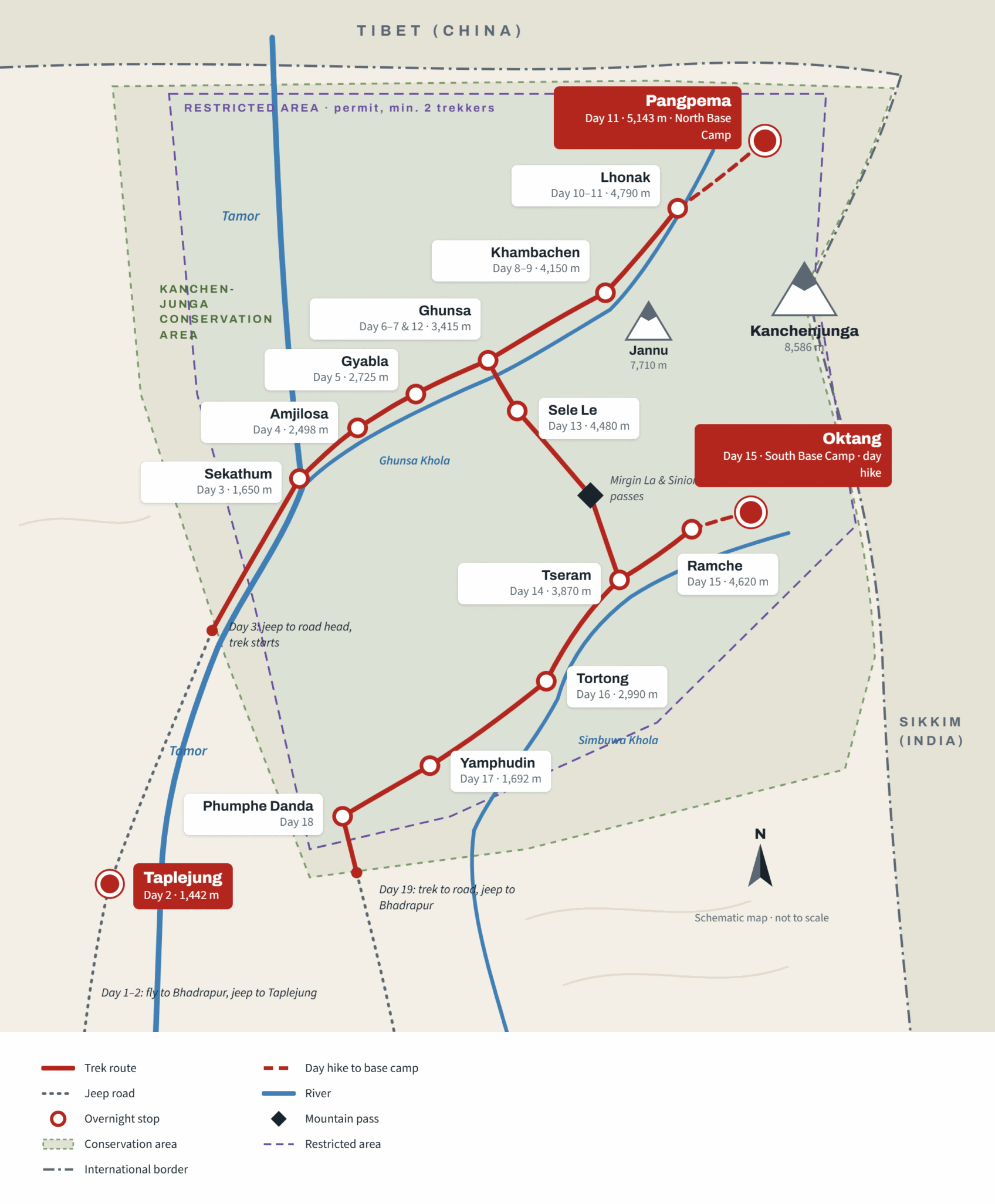
Kanchenjunga Trekking Map
FAQs
General
It’s strenuous and one of Nepal’s longest treks: 16 days of walking, up to 5,143 m, with three high passes and some landslide-prone sections. Good fitness and previous trekking experience are recommended.
Pangpema, the Kanchenjunga North Base Camp, at 5,143 m.
Yes. Since March 2026 a solo trekker can get the restricted-area permit when trekking with a licensed guide through a registered agency like ours. The package costs US$1,975 for one trekker.
A Restricted Area Permit, a Kanchenjunga Conservation Area Project (KCAP) permit and, if required, a TIMS card. We arrange all of them for you.
US$1,975 for one trekker, or US$2,175 in total for two trekkers. On top of this, budget about NPR 5,000 (about US$37) per person per day for food and accommodation at tea houses, plus flights and insurance.
Usually 5-7 hours. A few days are shorter, and the return from Lhonak to Ghunsa and the pass crossing to Tseram are long days.
Autumn (October–November) has the most stable weather and clearest views. Spring (March–May) is also good, with rhododendrons in bloom. Avoid the June–September monsoon and the December–February winter, when the high passes are often blocked by snow.
You can charge batteries at most lodges, sometimes for a small fee (bring your own charger and a power bank). Hot showers are rare, especially above Ghunsa.
There are no ATMs after Taplejung, so bring enough Nepali rupees for the whole trek. Mobile signal usually works up to Ghunsa; beyond that, expect no connection.
So your money goes directly to the families who run the lodges, and so you are free to choose what you eat and where you stay.
Yes. You can visit only the north or only the south base camp, add rest days, or combine the trek with the Lumba Sumba Pass. Tell us what you’d like and we’ll send you an updated itinerary and cost.
Warm layers, a down jacket, a four-season sleeping bag, good boots, microspikes (for snowy passes), a water filter or purification tablets, a power bank or solar charger, snacks and toilet paper.
Fly from Kathmandu to Bhadrapur (about 45 minutes). From there a reserved jeep takes you through Ilam and Phidim to Taplejung (6–8 hours), and the next day to the Tamor River bridge, where the walk begins. See “How to get there” above.
In hotels in Bhadrapur and Taplejung, and in simple tea houses and lodges on the trail, including a basic lodge at Sele Le. Rooms are basic, often with shared toilets, so bring a warm four-season sleeping bag.
Book Kanchenjunga Trek with us
Send Us Message
Trip List


Guests' Reviews
Posted on Tripadvisor
 hugo m
Verified
Nepal best 's trek Nepal best 's trek, very remote, very wild, lots of different scenery. If you want to trek in a place that is still very authentic you should go for it.Posted on Tripadvisor Mola kMakalu Base Camp Makalu Base Camp trekking is definitely not for the faint-hearted. It's a challenging route that requires a lot of experience and good physical condition. You'll pass through snowfields such as Shipton La & Keke La, which are located above 4000m and covered in deep snow, making it difficult to trek. The snow blizzards and strong winds add to the challenge. You'll also encounter big boulders before reaching Yangle Kharka, which requires good balance and experience to navigate. The trek involves constant ascent and descent between 3500m to 4200m, and you'll climb (and descend) 8500m overall, including the viewpoint at 5900m elevation. However, all the hard work pays off when you witness the breathtaking mountain, river and lake sceneries that are unlike anything you've ever seen before. One of the most striking things about this trek is that you'll rarely see other hikers on the route. This gives you a unique opportunity to immerse yourself in the local culture and see firsthand how the Sherpa people live their everyday lives. We highly recommend using a local company like Makalu Arun Social Trek (MAST) and local guides/porters like Mr Suk Bahadur Ghimire and Mr Ratna Bahadur Rai, who have extensive knowledge of the area and are incredibly helpful.Posted on Tripadvisor
 arun uThe best and the only trekking company registered in Makalu region Right from the beginning Mr. Tejanath was very involved and helped with the planning and obtaining all the permits. His company is the only trekking company registered in the Maklau region so they only work with locals who have great knowledge about the region.Rajkumar Rai was my porter/guide who was incredibly helpful and without his support I wouldn't have made it to the base camp. From picking me up at the airport, inviting me to his lovely home for lunch Tejanath helped me prepare for the trek. After I finished the trek he made sure everything went well right until my return flight from Tumlingtar and even helped me with making alternate arrangements when my flight was cancelled.Overall if you want a real local experience for me exploring the Makalu base camp and very reasonably priced compared to what other companies from Kathmandu charge your best option is Maklau Arun Social TrekPosted on Tripadvisor
 Peter MA highly recommended trek This was my tenth trek in Nepal and my fourth trek this year as I am making up for lost time during Covid. In October 2002 I trekked in Dolpo with a group for a month and then wanted to do a shorter and cheaper trek in November 2002 before returning to the UK. The Makalu Base Camp trek seemed ideal as I wanted to have close up views of the mountains and trek somewhere that wasn’t too commercialised or busy.Makalu Arun Social Treks (MAST) was mentioned in the Lonely Planet guide book and, after looking at their website and reading the good Tripadvisor reviews, I decided that the service they were offering was what I wanted. What I wanted was a good porter/guide at a reasonable rate and for someone to organise the required transportation and other aspects of the trek like the TIMS card.MAST was set up to help fund an orphanage but no longer does this as the government has taken over this responsibility. MAST is run by Tejanath who is a retired English school teacher who lives in Khandbari. This year they haven’t organised many treks and mine was their fourth trek for the year. Tejanath was extremely helpful from the moment I contacted him and always promptly replied. He prefers Whatsapp so we soon switched to that and he is happy to talk on Whatsapp also.Tejanath allocated me a porter/guide called Suk (aka Strong Man) who was very good and friendly, strong enough to carry all my gear and spoke some English. He also lives in Seduwa, which is at the start of the trek, so he knew the trek and the local people very well. I didn’t expect him to speak English and the only problem was that he thought his English was better than it was. As a result it was sometimes a bit difficult and frustrating trying to understand him.Tejanath personally met me at Tumlingtar airport and brought me by tuk tuk to my hotel in Khandbari and also took me back to the airport. He and his wife were both very hospitable and looked after me very well whilst I was in Khandbari. The trek was very well organised and I have absolutely no hesitation in recommending MAST for the Makalu Base Camp trek. It is much better and cheaper to use MAST than a Kathmandu based trekking agency. I also think that the Makalu trek is excellent and one gets very close up to so many 6,000 to 8,000 metre peaks. You can fairly easily get up to 5,738 metres on this trek, which is higher than on a lot of other treks in Nepal.I have posted a trip report on the Tripadvisor travel forum:https://www.tripadvisor.co.uk/ShowTopic-g293889-i9243-k14193957-Lower_Dolpo_and_Makalu_Base_Camp_Treks_Trip_Report-Nepal.htmlPosted on Tripadvisor
 ELCAMINENTEMakalu basecamp yrek I returned to Nepal for the 8th time, to do Makalu basecamp trek in October 2022, starting from Phaplu to the Arun river and up the high passes to the Barun river towards the basecamp and back the same way to Tumlingtar. I used the services of Makalu-Arun social trek (MAST) because it fits my budget supplying a porter/guide only (a porter who knows the trail). The walk was great and Tejanath of MAST took care of all the details. Really there was no need for a guide as the trail was clear all the way and it was nice to walk alone in the nature as my porter was most of the time well ahead or behind. Here follows some notes for other travellers :1- For the first time i noticed a lot of Nepali trekkers on the trail, this will definitely make the experience richer and change the old image of trekking in the Himalayas forever.2- The trail is a lodge trek with new and big lodges all the way, there are even smaller lodges halfway for lunch or a less crowded experience. Note that prices here are higher than elsewhere in Nepal (rooms from 500 to 700 per person and same for a Dahlbat). The smaller lodges tend to charge more than the big ones.3- the big "draw back" for this trek is the terrible jeep ride from Khandbari to Num, really 4 to 5 hours of non stop shaking through deep muddy trenches and big rocks. I hope that the national park authority will really try to find a walking alternative adding 2 more days to the trek.Posted on Tripadvisor
 splixerScenic and strenuous hike in the Himalays I completed the Makalu Base Camp trek early October and had a great experience. The trek itself is a pretty hard one. Harder than Everest Base Camp and the Annapurna Cicuit trek which I did back in 2016. But it is more rewarding. Still a pristine off-the-beaten path trail. Especially the Barun valley is heaven on earth. During 14 days I just met one foreign tourist. Besides him just friendly locals on the trail. On the lower section of the trail you will see mainly Hindu people. The higher you go the more Bhuddist people you will meet. This gives the trek a nice contrast. Accommodations and food a pretty basic on this trek (don’t expect deep fried chocolate bars). I recommend vegetarian food while hiking in order to prevent food poisoning.With MAST you pay for the porter guide and transportation in advance. Your personal expenses on the trek you pay as you go. This consists mainly of food and accommodation. Sometimes I experienced some bigger price differences between the accommodations/food places. I recommend you confirm the price in advance at these places. In short this is a more cost-effective way to hike. If you go for a Kathmandu based agencies you could easily spend double the price.My guide was a local from Seduwa village on the trail. He was very strong and helpful person. However I experienced a culture-shock sometimes 😉.While hiking I recommend to get up as early as possible to experience clear conditions. Yes, it still rains a lot even during mid-September. Also you should bring good hiking sticks hence the trek can be quite technical at some points. Expect landslide areas and rough river crossings.In a nutshell I recommend this trek to the experienced hiker. This is not a hike for rookies. But it is definitely worth the struggle. Your reward will be higher than on other treks in Nepal.Posted on Tripadvisor
 Sham TatkareBrief Trek Report and Feedback about Makalu Arun Social Trek (MAST) Makalu (27,820 ft.) is worlds 5th highest mountain. It is located at 20 km southeast of Mount Everest, Nepal. Our journey and trek route was, Pune - Delhi - Kathmandu - Biratnagar – Dharan – Khandbari - Num – Seduwa – Tashigaon - Danda kharka – Khongma – Dobato - Yangle kharka - Shiv Dhara - Langmale Kharka - Makalu Base Camp. Trek route is initially through Arun valley and then we enter in to Barun Valley. Due to lack of basic facilities & development, this region of Himalaya has been preserved in its best form. Quality of air, water and vast variety of fauna & flora are really exceptional. Barun valley has many Rudraksha trees and medical plants (Jadi-Buti). As per local belief, people living in Barun valley never have any disease and look much younger than their age. Recently (April 2019) Yati foot prints were reported by Indian army expedition team near Langmale Kharka. Tashigaon is the famous village of high altitude specialist mountaineers i.e. “The Sherpas”. At Danda Kharka, near Tashigaon, we had a tea break. The hotel owner Sherpa Mr. Lakpa Gylzen, 22 years age, casually told us that he had climbed Mount Everest twice and few more peaks. I felt ashamed that Everest climber was serving tea to an ordinary trekker like me. . . Shiv Dhara is a 500 feet tall waterfall, on the mouth of a huge dome shape cave. It is believed that God Shiva using his Trishul made a hole in the cave (top side) to solve water scarcity problem in this region. Guide asked me to stand at about 8 feet away from main stream of water fall and then we started praying God Shiva. After about 5 minutes, the water fall changed its position and water started falling on our heads. Guide informed that we are blessed by the God. Of course, there is a scientific reason for this natural phenomenon. However, such incidents help to strengthen one’s belief in God and inspire us to follow the path of righteousness & virtues. . . No words will be enough to Thanks my brave guide Mr. Shuka Bahadur Ghimre & the respected school teacher, Mr. Tejanath Pokharel, Chairperson, Makalu Arun Social Trek (MAST) & his family for organizing such a wonderful trek and all the help. We are also thankful to Mr. Mohan Kumar Kafle, Chairman (MAST) for the coordination & arranging necessary trek documents.Posted on Tripadvisor
 gillgill999
Verified
Well organised trek We did the Makalu Base Camp trek in November 2017. This was our ninth trek, organised through different agents in Nepal. For this trek we chose a local agent rather than one based in Kathmandu because the route is still relatively undeveloped and we wanted the benefit of local knowledge and contacts. We have no hesitation in recommending Tejanath. He always answered our email queries promptly and fully, gave us wonderful hospitality before and after the trek, found us an excellent porter and guide, and efficiently organised all the paperwork and land transport before and after the trek. Our guide was related to the extended family that runs all the guest houses on the trek, which enriched our experience. Makalu Base Camp is a beautiful and relatively uncrowded trek, well worth the extra hassle and expense of the flight into Tumlingtar. But you need to be prepared for quite basic food and accommodation, and be aware that once over the Shipton La communications (and hence rescue, should it be necessary) are difficult. Best for trekkers who have some experience.Posted on Tripadvisor Alex WMakalu BC Trek Nov. 2016 Tejaneth of MAST organized a porter/guide (Suk Bhadur Ghimibre) and porter (Raskamar Ghimibre) from the village of Seduwa for our teahouse trek to Makalu Base Camp in November 2016. What an amazing experience! The route and teahouses along it were relatively uncrowded, the natural landscape was epic, the cultural tapestry overlaying all of it was fascinating. Our guide and porter were fantastic and everyone we met along the way was friendly. I would definitely recommend this trek and MAST. I would love to return someday to do this same trek again, and/or one of MAST's Social Treks. Tejaneth and his wife were very gracious and welcoming at the beginning and end of our journey. Namaste, Dhanyavaad, and Feri Betonlah!Posted on Tripadvisor
 EjeebeeMakalu base camp April 2019 I did the trek in April 2019. MAST was very helpful in helping organizing the trek in general. Tejanath coordinated a porter guide for my solo trip and also arranged accomodation in Khandbari. He also helped me get a seat on a plane back to KTM, thank you again! My guide Suk Bahadur was very knowledgeable about the trail and did speak some english. I also stayed at his house and his family was very welcoming. He helped arrange accommodation in tea houses and was regularly asking other sherpas for trail updates along the way. I would just recommend anyone who does this trek in general to bring lots of snacks - past Shipton La expect a diet of rice and potatoes. I got really hungry on the way down. If you do the trek with MAST specifically, be aware that not all porter guides are equipped equally. All i had for my guide was a duffle bag, which he ended up carrying in a very uncomfortable way for 16 days because he didn't like to use straps or baskets like most porters across Nepal. So i would recommend that you ask in advance who your guide will be and what kind of equipment they have or don't have. In doubt, bring a backpack for you and for your porter.The trail conditions were unexpectedly snowy last April (several meters of snow and warm T up and down Shipton La). Nepalese people have no training/awareness of avalanche risks. Use your best judgement and speak up if you feel uncomfortable.
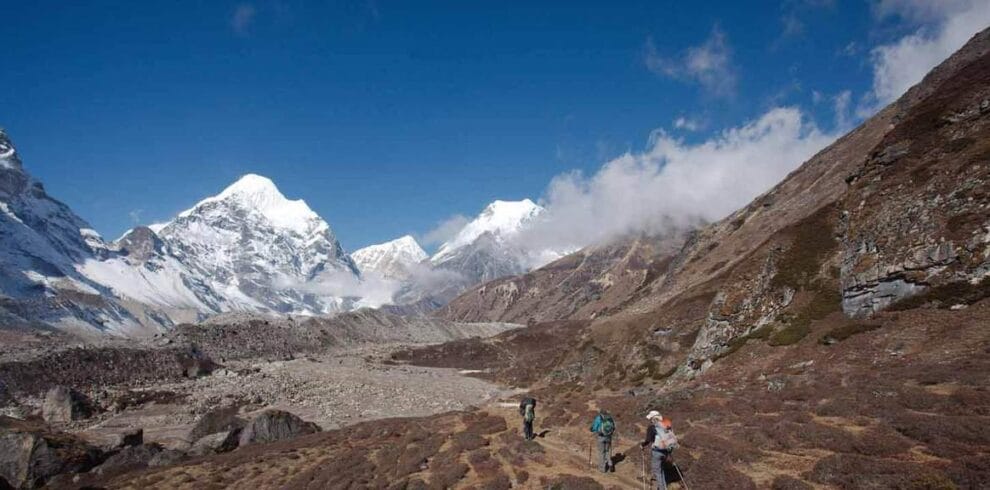
A remote, uncrowded tea-house trek over Shipton La into the Barun Valley, to the foot of Mt Makalu, the world's fifth-highest mountain.
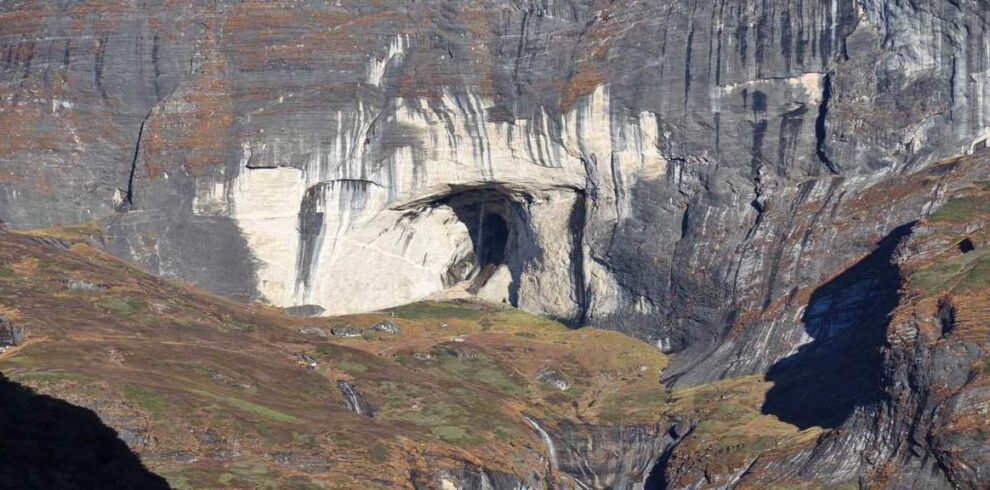
A sacred Himalayan journey beneath Makalu to the holy Shiva Dhara waterfall and Parbati cave, through Sherpa and Rai villages.
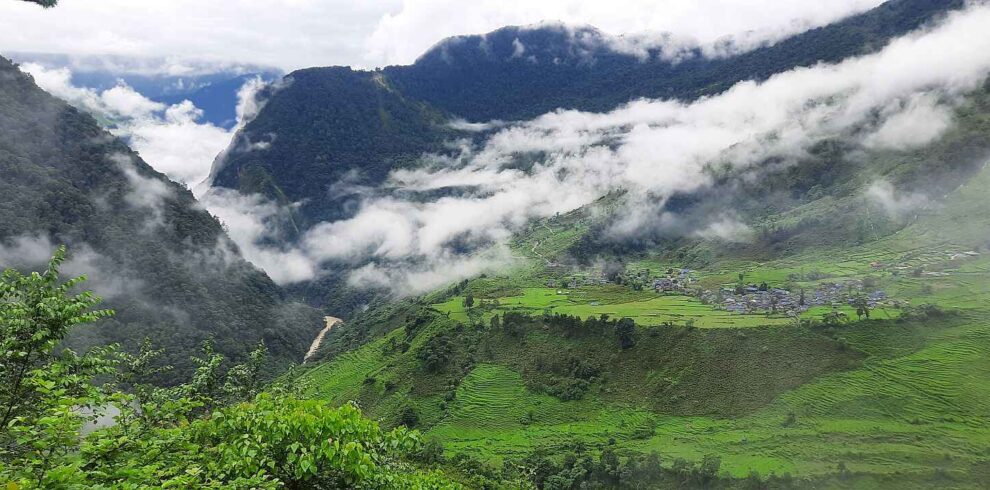
A peaceful, uncrowded trail up the Arun Valley to Kimathanka on the Tibet border, with Hatiya hot springs, Bhote villages, waterfalls and views of Makalu and Chamlang.