Community-based trekking is trekking organised so that the communities along the trail run it and benefit from it. Your guide comes from a local village, you sleep in family-run tea houses and homestays, and part of the money goes to local projects.
At Makalu Arun Social Trek (MAST), it is the only way we trek. We were set up in Khandbari in 2010 by SESF (Sankhuwasabha Education Scholarship Foundation), a local organisation that has helped children stay in school since 1997. Our treks exist to support that work.
This post explains how community-based trekking works in practice, using our school project as the example of what it can achieve.
Community-based trekking vs a standard package
Both can give you a great trek. The difference is who organises it, and who benefits.
| Community-based trek (MAST) | Typical package trek | |
|---|---|---|
| Organised from | Khandbari, at the start of the trek | Often Kathmandu or abroad |
| Guide and porters | From villages on the trail, such as Seduwa and Tashigaon | Often hired from other regions |
| Tea houses | You pay each family directly | Often booked and paid through the agency |
| Profits | No profit to owners; surplus funds local projects | Usually go to the company’s owners |
| Group size | 1–6 trekkers | Varies, can be larger |
| Extras | Optional school or elderly-home visits | Usually sightseeing only |
Community-based trekking is not always cheaper or more comfortable. Routes like Makalu are remote and basic. But more of your money stays in the valleys you walk through.
How our community model works
Our model rests on four simple choices.
1. A local office
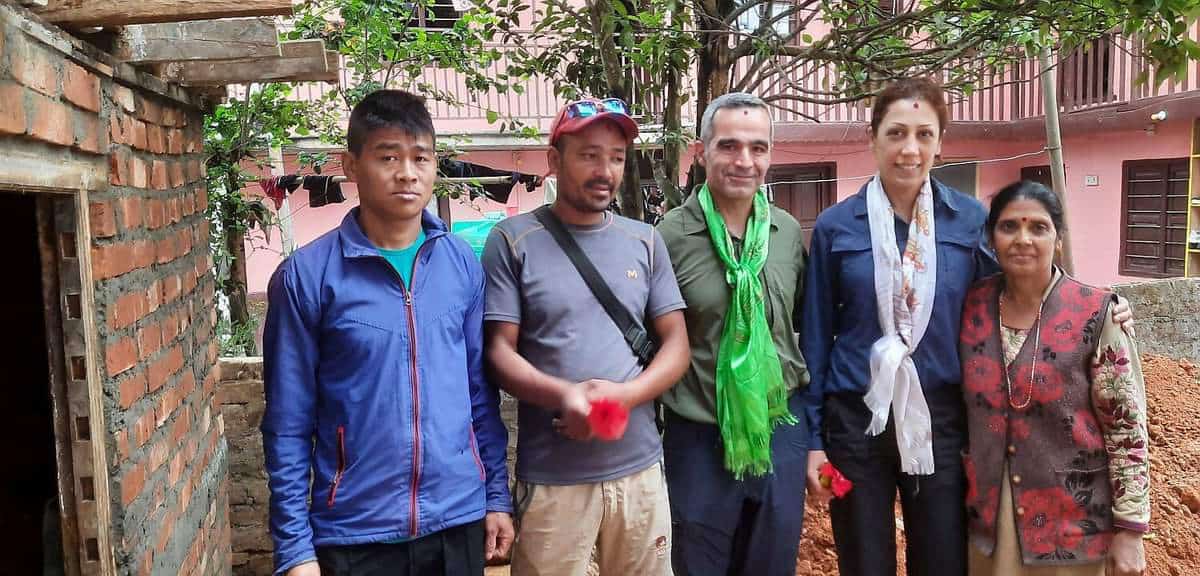
We are based in Khandbari, the gateway town for Makalu. Our team plans your trek, arranges permits and transport, and meets you at Tumlingtar airport. Being local means we know the trail, the lodge owners and the weather, and the money we spend on running the trek stays in town.
2. Porter-guides from the trail
Our porter-guides come from villages on the Makalu trail, mostly Seduwa and Tashigaon. They are paid a daily wage, insured for every trek, and given shoes, socks and gloves. Their wages are spent in their own villages.
3. Family-run tea houses
You sleep in tea houses and homestays run by local families, and you pay them directly for your room and meals. That way the family receives the full price on the same day.
4. Profits to the community
MAST is non-profit-distributing: we pay no profit to owners. Part of every trip fee, and whatever is left after costs, goes to two projects in Sankhuwasabha: school supplies for children and food for Manakamana Elderly Home.
For a line-by-line breakdown of the costs, read Where Your Trekking Money Goes.
Our school project: how it started
The school project is older than MAST itself.
- 1997: SESF is founded in Khandbari to help children in Sankhuwasabha who struggle to get an education, especially those who have lost a parent’s support.
- 2010: SESF sets up Makalu Arun Social Trek, so that trekking can give its work a steady income.
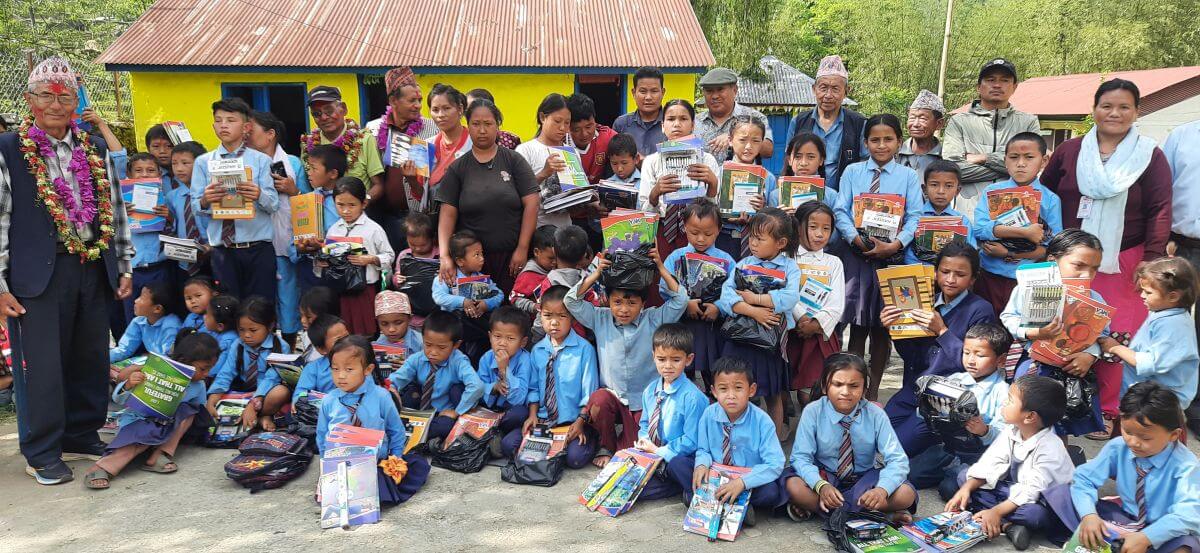
- Today: every MAST trek contributes to school supplies, uniforms, winter clothing and scholarships for children in local government schools.
The idea was simple. Trekkers were already coming to Sankhuwasabha for Makalu. If a local agency organised their treks, the money could help local children rather than leave the district.
What the school project has achieved
| Children supported | Around 6,000 |
| Schools reached | 15 schools in Sankhuwasabha |
| What USD 300 provides | School stationery for 100 students for a whole year |
| What we provide | Supply kits, uniforms, shoes, winter clothing, scholarships, teaching materials and sports equipment |
| Verified by | GlobalGiving, which lists our projects as vetted and site-visit verified |
Read more about what children need and what a donation buys in Trek and Give Back: Supporting Schools in Sankhuwasabha.
A community-based trek, step by step
Here is where the community comes in on our 18-day Makalu Base Camp Trek.
| When | What happens | Who benefits |
|---|---|---|
| Day 1 | Our team meets you at Tumlingtar and takes you to a hotel in Khandbari, where you meet your porter-guide | Local drivers and a Khandbari hotel |
| Day 2 | A reserved jeep takes you to Seduwa, home village of many of our porter-guides | Local jeep owners |
| Days 3–15 | You trek with your porter-guide and stay in family-run tea houses | Your porter-guide and tea-house families |
| Day 16 | Back to Khandbari by jeep | Local jeep owners |
| Day 17 | Free day: visit the market, buy local products, or visit a school with our team | Local shops and schools |
| After your trek | Part of your trip fee goes to school supplies and the elderly home | Children and elders in Sankhuwasabha |
Which treks are community-based?
All of them. Every MAST trek uses local porter-guides and family-run tea houses, and contributes to our projects. Treks in our home region of Makalu and the Arun Valley give you the closest contact with the communities we support:
- Makalu Base Camp Trek: 18 days to the foot of the world’s fifth-highest mountain
- Makalu View Trek: 7 days of Makalu panoramas and village life
- Upper Arun Valley Trek: remote villages along the Arun River
- Shiva Dhara Trek: 14 days to a sacred waterfall below Makalu
- Tailor Made Trekking Holiday: a community-based trek planned around you
We also run community-based treks in the Everest, Kanchenjunga, Manaslu and Annapurna regions. See all our trekking packages.
Community-based trekking in Nepal: FAQs
What is community-based trekking?
Trekking organised so that local communities run it and benefit from it: local guides, family-run tea houses and homestays, and part of the money going to local projects.
Is community-based trekking more expensive?
Not necessarily. With MAST, you pay only for the services you use and pay tea houses directly. Our 18-day Makalu Base Camp Trek starts from $1,176 for 2 adults.
Is it suitable for first-time trekkers?
Yes. Choose a shorter or easier route, such as the Makalu View Trek, and we’ll plan the pace around you.
How does my trek help the school project?
Part of every trip fee, and everything left after costs, goes to school supplies, uniforms and scholarships for children in Sankhuwasabha.
Can I visit a school?
Yes. The easiest time is after your trek, on a free day in Khandbari. Read how volunteering while trekking works.
Plan your community-based trek
Tell us your dates and interests, and we’ll plan a community-based trek with you from Khandbari.
- Browse our trekking packages
- See our community projects
- Read How to Trek Responsibly in Nepal
- Contact us through our contact page, on WhatsApp at +977 9861714199, or at makaluaruntreks@gmail.com