Makalu region · Tea houses, homestays and pilgrim huts and tents
Sabha Pokhari Pilgrimage Trek
- Trek
- Sabha Pokhari Pilgrimage Trek
- Trek type
- Tea houses, homestays, pilgrim huts and tents
- Duration
- 10 days
- Guided trekking days
- 8 days
- Program starts/ends
- Khandbari
- Trek difficulty
- Strenuous
- Maximum elevation
- 4,200 m
- Walking duration
- 4–8 hours
- Group size
- 1–6 people
- Best season
- Apr–May · Jul–Aug · Oct–Nov
- Transportation
- Jeep, flight and auto rickshaw
- Permits
- TIMS card
From $1,200 for 1 Trekker
Book this trekOverview
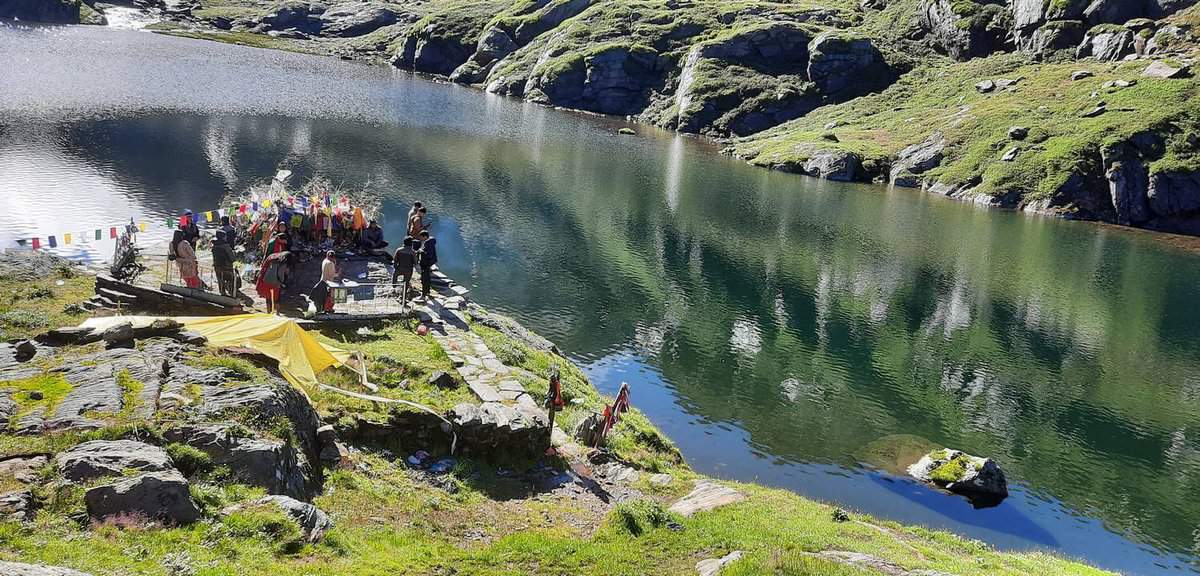
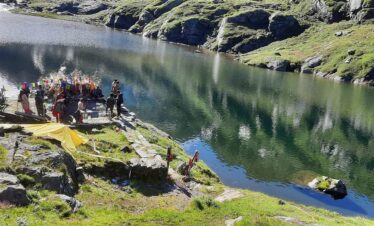
Sabha Pokhari is a sacred lake at about 4,200 m in the hills of Sankhuwasabha, eastern Nepal. For Hindus, Buddhists and the Kirat people it is a place of great religious and cultural importance, and every year, between Nag Panchami and Janai Purnima, thousands of pilgrims climb here to bathe in the lake and make offerings. Local tradition links the lake to the sage Vyasa (Byas Rishi).
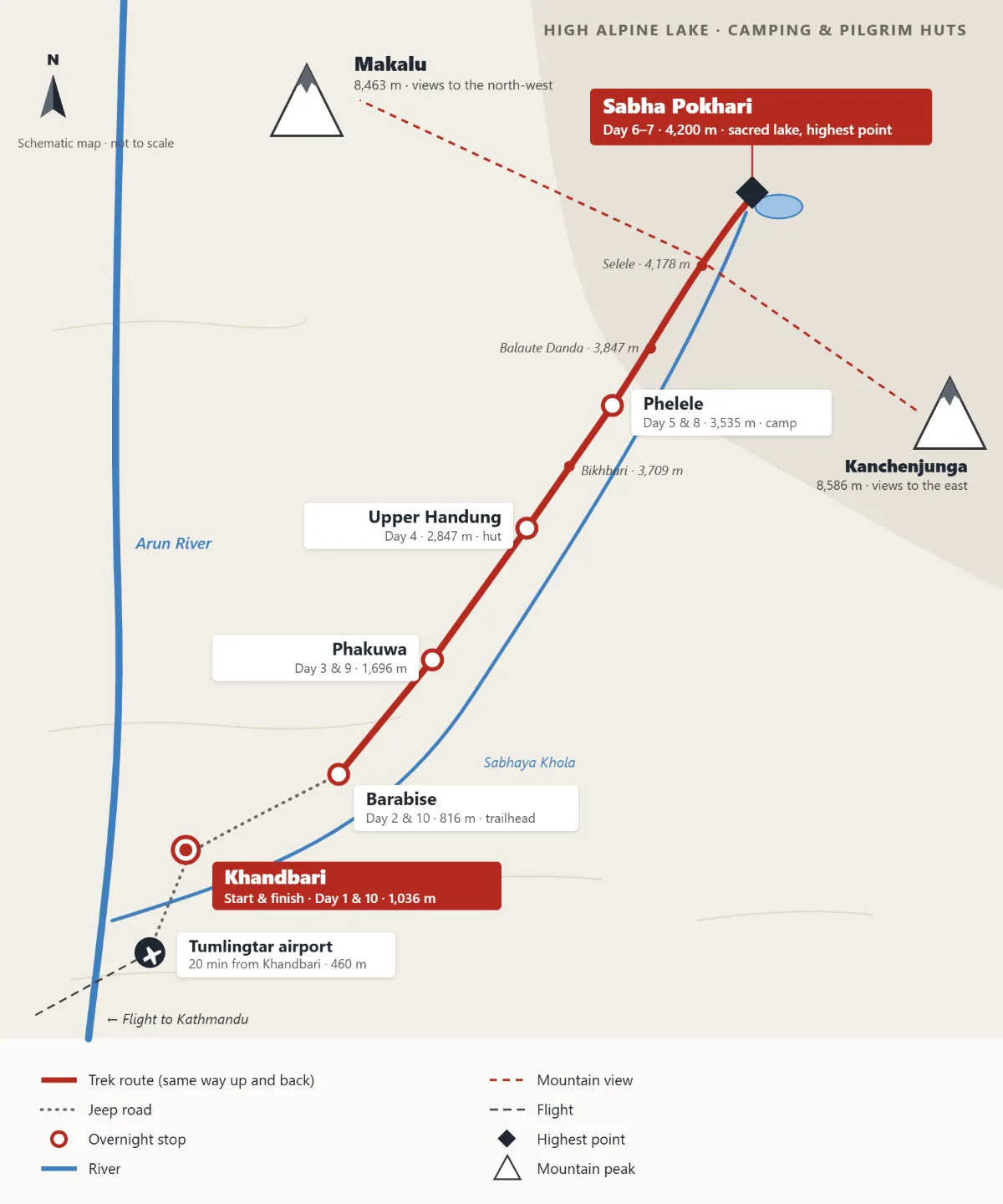
From Khandbari, MAST’s home town, a jeep takes you to Barabise. You then climb steeply through villages and forest to Phakuwa and Upper Handung, then up onto high open ridges past Bikhbari and Selele to Sabha Pokhari. After a day at the lake, you return the same way, down past Phelele and Phakuwa to Barabise, where a jeep takes you back to Khandbari.
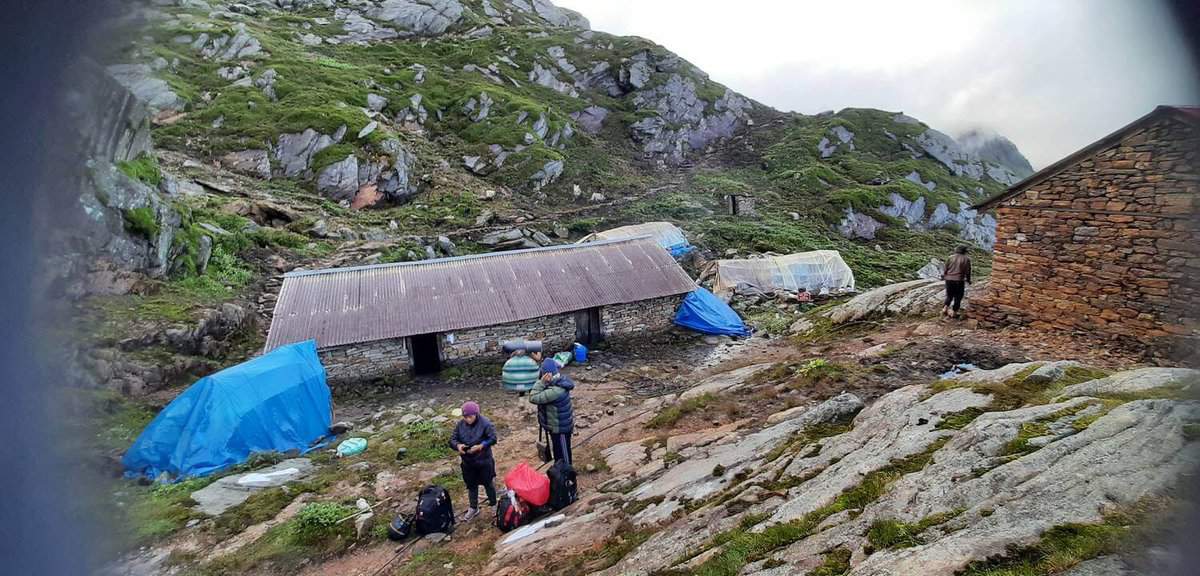
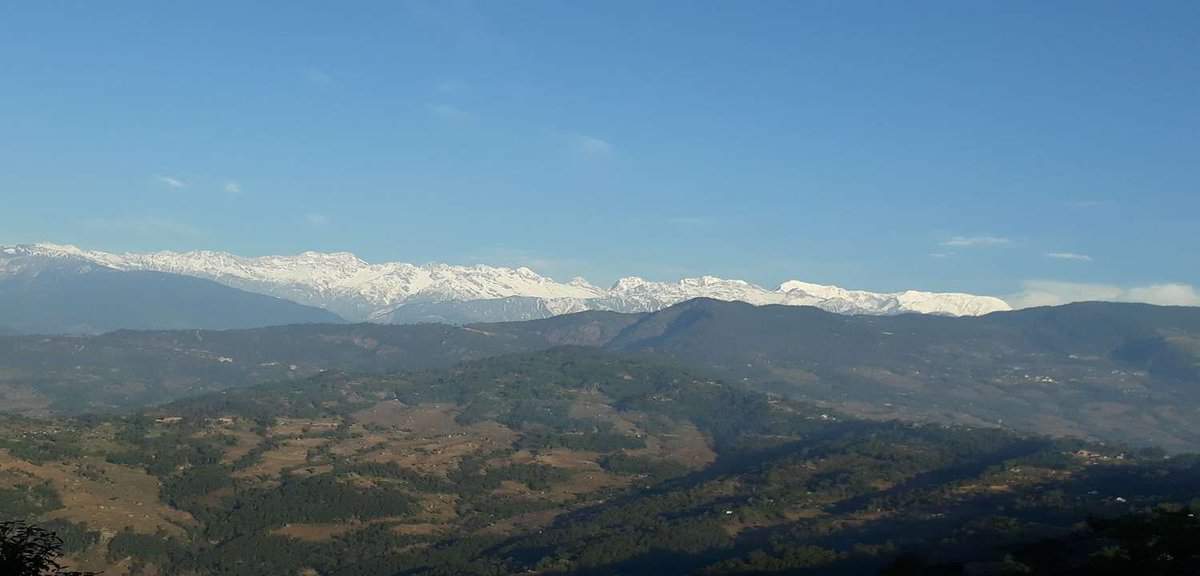
On clear days the high ridges give wide views of Makalu, Kanchenjunga and the eastern Himalaya. Above Phakuwa there are no villages or tea houses: you stay in simple pilgrim huts and tents. This is a remote, physically demanding trek that combines a real pilgrimage with mountain wilderness.
You trek with a licensed guide, as required by Nepal’s trekking rules, and a local porter. Your trek supports the families along the way, and MAST’s profits fund schools and elderly care in the Makalu–Arun region.
See all our pilgrimage treks, including the Shiva Dhara Trek and the Char Dhara Trek.
Highlights
- Visit Sabha Pokhari, a sacred lake at about 4,200 m, and join the pilgrims at festival time
- See Makalu and Kanchenjunga from high, open ridges
- Walk through rhododendron forest and alpine meadows rich in medicinal herbs
- Trek a remote route that very few foreign trekkers have seen
Best Time for the Sabha Pokhari Trek and Festival Dates
The main pilgrimage season runs from Nag Panchami to Janai Purnima, usually between late July and August. The exact dates follow the lunar calendar and change every year. Contact us for this year’s dates. This is the most atmospheric time to visit, but it is the monsoon: expect rain, leeches, slippery trails, possible landslides and cloudy views.
For dry trails and clear mountain views, trek in October–November or April–May. The lake is quieter then, and some huts may be closed, so we carry tents.
- Day 1 1,036m
- Day 3 1,696m
- Day 5 3,535m
- Day 6 4,200m
- Day 7 4,200m
- Day 9 1,696m
- Day 10 1,036m
| Months | What to expect | Advice |
|---|---|---|
| Mar–May (spring) | Rhododendrons in bloom, mostly dry; snow still possible high up in March | Good time |
| Jun–Aug (monsoon) | Pilgrimage festival; rain, leeches, slippery trails and cloud | For pilgrims, with care |
| Sep–Nov (autumn) | Dry trails, clear views of Makalu and Kanchenjunga | Best time for views |
| Dec–Feb (winter) | Snow and frozen lakes, pilgrim huts closed | Avoid |
Itinerary
A. Outline Itinerary
| Day | Description | Altitude (Meters) | Net Gain/Loss (Meters) | Trek Duration | O/N |
|---|---|---|---|---|---|
| 1 | Fly to Tumlingtar, drive to Khandbari | 1036 | 0 | 20 min drive | Hotel |
| 2 | Drive from Khandbari to Barabise | 816 | -220 | About 2 Hours (jeep) | Lodge |
| 3 | Trek from Barabise to Phakuwa | 1696 | +880 | 4-5 Hours | Tea house |
| 4 | Trek from Phakuwa to Upper Handung | 2847 | +1151 | 4-6 Hours | Hut |
| 5 | Trek from Upper Handung to Phelele | 3535 | +688 | 5-6 Hours | Tent |
| 6 | Trek from Phelele to Sabha Pokhari | 4200 | +665 | About 7 Hours | Tent |
| 7 | Sabha Pokhari exploration day | 4200 | 0 | Rest day | Tent |
| 8 | Trek from Sabha Pokhari to Phelele | 3535 | -665 | 5-6 Hours | Tent |
| 9 | Trek from Phelele to Phakuwa | 1696 | -1839 | 7-8 Hours | Tea house |
| 10 | Trek from Phakuwa to Barabise, drive to Khandbari | 1036 | -660 | 3-4 Hours + 2 Hours (jeep) | Hotel |
B. Detailed Itinerary
Fly from Kathmandu to Tumlingtar (arriving about 10:30 am) and drive 20 minutes to Khandbari. Meet your guide and porter and go through the trek plan. You can also reach Khandbari by road from Dharan (6–8 hours).
A two-hour jeep ride takes you down to Barabise. Check in, prepare supplies for the high days ahead, and enjoy a traditional dal bhat dinner.
Start early to avoid the midday heat. The trail climbs steadily but not steeply through villages and farmland to Phakuwa (4–5 hours). Overnight in a tea house or homestay.
A hard day with a long, steep climb through forest to the hut at Mathillo (Upper) Handung (4–6 hours). From here on there are no villages, so your team carries food.
The steepest section of the trek, up the rock face known as Coeletro Bhir, then over Bikhbari (3,709 m) to the camp at Phelele (5–6 hours).
A long day (about 7 hours) along high ridges through Balaute Danda (3,847 m) and Selele (4,178 m), where there is water, to Sabha Pokhari. Walk slowly and drink plenty: you gain a lot of height in a short time.
Spend the day at the sacred lake. Watch or join the pilgrims as they bathe and pray, enjoy the views on a clear morning, and rest to help your body adjust to the altitude.
Say goodbye to the lake and retrace your steps along the high ridges past Selele and Balaute Danda, then down to the camp at Phelele (5–6 hours). Overnight in tents.
A long, steep descent of more than 1,800 m: over Bikhbari, down the Coeletro Bhir rock face and through the forest past Upper Handung, back to the villages at Phakuwa (7–8 hours). Walking poles help on the steep sections. Overnight in a tea house or homestay.
Walk down through the villages and farmland to Barabise (3–4 hours), where a reserved jeep takes you back to Khandbari (about 2 hours). Celebrate the end of the trek with your guide and porter. The next morning, drive 20 minutes to Tumlingtar for the flight to Kathmandu, or take the bus to Dharan.
Permits for this trek
- TIMS card (Trekkers’ Information Management System): about NPR 2,000 per person.
We arrange all your permits through our registered agency (TAAN no. 1597) before the trek. Please send us a copy of your passport and 2 passport-size photos. Fees can change, so we confirm the current amounts when you book. See The Cost Includes for which fees are in your price. Want to know how your price is worked out? See how we price your trek.
How to Get to Sabha Pokhari
Sabha Pokhari is in Sankhuwasabha district, eastern Nepal. The trek starts and ends in Khandbari, where our office is.
- Kathmandu to Tumlingtar by plane: 30–40 minutes, daily flights. Tumlingtar to Khandbari is about 10 km, 20 minutes by jeep.
- Kathmandu to Khandbari by bus: an overnight bus ride, about NPR 3,000 per person.
- Dharan or Biratnagar to Khandbari by road: Dharan to Khandbari is about 175 km via Dhankuta and Hile.
- Khandbari to Barabise: about 2 hours by jeep.
- Barabise to Sabha Pokhari on foot: 4 days via Phakuwa, Upper Handung and Phelele. You come back the same way to Barabise, then 2 hours by jeep to Khandbari.
Cost and Price Details
The price includes
- A licensed guide: daily wages, food and accommodation throughout the trek
- Travel insurance for the guide
- A porter: daily wages, food and accommodation throughout the trek (one porter for every 2 trekkers)
- Optional USD 60 per trekker for our community projects (school supplies for about 9 children for a year). Ask us if you would like it removed from your price.
- 25% agency service charge, including government tax
The price does not include
- International and domestic flights (Kathmandu–Tumlingtar)
- Nepal visa (currently $30 for 15 days, $50 for 30 days)
- Hotel room reservation in Kathmandu
- Food and accommodation on the trek (paid directly to tea houses and homestays)
- Reserved jeeps Khandbari–Barabise and Barabise–Khandbari
- Travel and medical insurance, including helicopter rescue, for the guest
- Personal expenses: drinks, hot showers, charging, laundry, shopping
- Tips for your guide and porter
- Costs caused by events outside our control, such as flight cancellations, landslides or strikes
Food and accommodation on the trek
In the villages you stay in simple tea houses or homestays and pay your hosts directly (budget around US$50 per person per day). Above Phakuwa there are no villages or lodges: you sleep in pilgrim huts or tents, and your team carries the food.
Your Guide and Porter
Your guide and porter come from the villages of Sankhuwasabha and know this route, the pilgrim huts and the water sources above Phakuwa, where there are no villages. Your guide is licensed and looks after your safety at altitude. Your porter carries up to 15–20 kg of your luggage, so you only need a daypack. Their wages, food and insurance are included in your trek price.
Altitude and Fitness
This is a strenuous trek. The climb from Barabise (816 m) to Sabha Pokhari (4,200 m) is steep and long, and you spend four nights above 3,500 m in basic huts or tents. You should be fit, in good health, and ideally have trekking experience. Tell your guide straight away if you have a headache, nausea or dizziness. Travel insurance with helicopter rescue up to 5,000 m is required.
Sabha Pokhari (सभा पोखरी) for Nepali Pilgrims
Thousands of pilgrims from Nepal walk to Sabha Pokhari (सभा पोखरी) every year. Here is what you need to know:
- When: the festival runs from Nag Panchami to Janai Purnima (late July to August). The dates change every year.
- Permits: Nepali citizens don’t need a TIMS card.
- Getting there: bus from Kathmandu or Dharan to Khandbari (about NPR 3,000 from Kathmandu), then about 2 hours by jeep to Barabise.
- Where to stay: there are no lodges above Phakuwa. Bring a tent, food and a stove, or join a group.
- Money: there are no ATMs after Khandbari, so carry enough cash.
- Safety: in festival time expect rain, leeches and landslides, and the climb to 4,200 m is fast. Go with someone who knows the route. We can arrange a local guide or porter: call or WhatsApp +977 9861714199.
Sabha Pokhari Trek Map
FAQs
General
The pilgrimage season runs from Nag Panchami to Janai Purnima, usually between late July and August. The dates follow the lunar calendar and change every year, so contact us for this year’s dates.
Yes. October–November and April–May give drier trails and clearer views. The lake is quiet then, and we carry tents in case the huts are closed.
Sabha Pokhari itself, at about 4,200 m. Selele (4,178 m), on the ridge just before the lake, is almost as high.
In a hotel in Khandbari, tea houses and homestays in the villages, and pilgrim huts or tents above Phakuwa
Yes. A licensed guide is now required for trekkers in Nepal. On this remote route a guide is also essential for finding the way, water and shelter. All our treks include a licensed guide and a porter.
Only up to Barabise and Phakuwa. Above that there is no electricity, so bring a large power bank or a small solar charger.
There is internet in Khandbari. Mobile signal works in parts of the route, but not everywhere.
Only in Khandbari. Bring enough Nepali rupees for the whole trek.
You can fly to Biratnagar instead (about 40 minutes), go by bus to Dharan, and continue to Khandbari by jeep (6–8 hours). We will help you arrange this.
Yes. We can add an acclimatization day, start or finish via Tehrathum (Chauki, Gupha Pokhari and Milke Danda), or combine it with another trek. Extra days are charged at the daily rate for your guide and porter.
Sabha Pokhari is at about 4,200 m, the highest point of the trek.
In Sankhuwasabha district, Koshi Province, eastern Nepal, east of the Arun river. It is 4 days on foot from Barabise, which is about 2 hours by jeep from Khandbari.
10 days, from your flight to Tumlingtar on Day 1 to your return to Khandbari on Day 10, with 8 days of walking.
Yes. Take the overnight bus from Kathmandu to Khandbari (about NPR 3,000), or come by road from Dharan. We can meet you at the Khandbari bus park.
Book This Trek
Send Us Message
Trip List


Guests' Reviews
Posted on Tripadvisor
 hugo m
Verified
Nepal best 's trek Nepal best 's trek, very remote, very wild, lots of different scenery. If you want to trek in a place that is still very authentic you should go for it.Posted on Tripadvisor Mola kMakalu Base Camp Makalu Base Camp trekking is definitely not for the faint-hearted. It's a challenging route that requires a lot of experience and good physical condition. You'll pass through snowfields such as Shipton La & Keke La, which are located above 4000m and covered in deep snow, making it difficult to trek. The snow blizzards and strong winds add to the challenge. You'll also encounter big boulders before reaching Yangle Kharka, which requires good balance and experience to navigate. The trek involves constant ascent and descent between 3500m to 4200m, and you'll climb (and descend) 8500m overall, including the viewpoint at 5900m elevation. However, all the hard work pays off when you witness the breathtaking mountain, river and lake sceneries that are unlike anything you've ever seen before. One of the most striking things about this trek is that you'll rarely see other hikers on the route. This gives you a unique opportunity to immerse yourself in the local culture and see firsthand how the Sherpa people live their everyday lives. We highly recommend using a local company like Makalu Arun Social Trek (MAST) and local guides/porters like Mr Suk Bahadur Ghimire and Mr Ratna Bahadur Rai, who have extensive knowledge of the area and are incredibly helpful.Posted on Tripadvisor
 arun uThe best and the only trekking company registered in Makalu region Right from the beginning Mr. Tejanath was very involved and helped with the planning and obtaining all the permits. His company is the only trekking company registered in the Maklau region so they only work with locals who have great knowledge about the region.Rajkumar Rai was my porter/guide who was incredibly helpful and without his support I wouldn't have made it to the base camp. From picking me up at the airport, inviting me to his lovely home for lunch Tejanath helped me prepare for the trek. After I finished the trek he made sure everything went well right until my return flight from Tumlingtar and even helped me with making alternate arrangements when my flight was cancelled.Overall if you want a real local experience for me exploring the Makalu base camp and very reasonably priced compared to what other companies from Kathmandu charge your best option is Maklau Arun Social TrekPosted on Tripadvisor
 Peter MA highly recommended trek This was my tenth trek in Nepal and my fourth trek this year as I am making up for lost time during Covid. In October 2002 I trekked in Dolpo with a group for a month and then wanted to do a shorter and cheaper trek in November 2002 before returning to the UK. The Makalu Base Camp trek seemed ideal as I wanted to have close up views of the mountains and trek somewhere that wasn’t too commercialised or busy.Makalu Arun Social Treks (MAST) was mentioned in the Lonely Planet guide book and, after looking at their website and reading the good Tripadvisor reviews, I decided that the service they were offering was what I wanted. What I wanted was a good porter/guide at a reasonable rate and for someone to organise the required transportation and other aspects of the trek like the TIMS card.MAST was set up to help fund an orphanage but no longer does this as the government has taken over this responsibility. MAST is run by Tejanath who is a retired English school teacher who lives in Khandbari. This year they haven’t organised many treks and mine was their fourth trek for the year. Tejanath was extremely helpful from the moment I contacted him and always promptly replied. He prefers Whatsapp so we soon switched to that and he is happy to talk on Whatsapp also.Tejanath allocated me a porter/guide called Suk (aka Strong Man) who was very good and friendly, strong enough to carry all my gear and spoke some English. He also lives in Seduwa, which is at the start of the trek, so he knew the trek and the local people very well. I didn’t expect him to speak English and the only problem was that he thought his English was better than it was. As a result it was sometimes a bit difficult and frustrating trying to understand him.Tejanath personally met me at Tumlingtar airport and brought me by tuk tuk to my hotel in Khandbari and also took me back to the airport. He and his wife were both very hospitable and looked after me very well whilst I was in Khandbari. The trek was very well organised and I have absolutely no hesitation in recommending MAST for the Makalu Base Camp trek. It is much better and cheaper to use MAST than a Kathmandu based trekking agency. I also think that the Makalu trek is excellent and one gets very close up to so many 6,000 to 8,000 metre peaks. You can fairly easily get up to 5,738 metres on this trek, which is higher than on a lot of other treks in Nepal.I have posted a trip report on the Tripadvisor travel forum:https://www.tripadvisor.co.uk/ShowTopic-g293889-i9243-k14193957-Lower_Dolpo_and_Makalu_Base_Camp_Treks_Trip_Report-Nepal.htmlPosted on Tripadvisor
 ELCAMINENTEMakalu basecamp yrek I returned to Nepal for the 8th time, to do Makalu basecamp trek in October 2022, starting from Phaplu to the Arun river and up the high passes to the Barun river towards the basecamp and back the same way to Tumlingtar. I used the services of Makalu-Arun social trek (MAST) because it fits my budget supplying a porter/guide only (a porter who knows the trail). The walk was great and Tejanath of MAST took care of all the details. Really there was no need for a guide as the trail was clear all the way and it was nice to walk alone in the nature as my porter was most of the time well ahead or behind. Here follows some notes for other travellers :1- For the first time i noticed a lot of Nepali trekkers on the trail, this will definitely make the experience richer and change the old image of trekking in the Himalayas forever.2- The trail is a lodge trek with new and big lodges all the way, there are even smaller lodges halfway for lunch or a less crowded experience. Note that prices here are higher than elsewhere in Nepal (rooms from 500 to 700 per person and same for a Dahlbat). The smaller lodges tend to charge more than the big ones.3- the big "draw back" for this trek is the terrible jeep ride from Khandbari to Num, really 4 to 5 hours of non stop shaking through deep muddy trenches and big rocks. I hope that the national park authority will really try to find a walking alternative adding 2 more days to the trek.Posted on Tripadvisor
 splixerScenic and strenuous hike in the Himalays I completed the Makalu Base Camp trek early October and had a great experience. The trek itself is a pretty hard one. Harder than Everest Base Camp and the Annapurna Cicuit trek which I did back in 2016. But it is more rewarding. Still a pristine off-the-beaten path trail. Especially the Barun valley is heaven on earth. During 14 days I just met one foreign tourist. Besides him just friendly locals on the trail. On the lower section of the trail you will see mainly Hindu people. The higher you go the more Bhuddist people you will meet. This gives the trek a nice contrast. Accommodations and food a pretty basic on this trek (don’t expect deep fried chocolate bars). I recommend vegetarian food while hiking in order to prevent food poisoning.With MAST you pay for the porter guide and transportation in advance. Your personal expenses on the trek you pay as you go. This consists mainly of food and accommodation. Sometimes I experienced some bigger price differences between the accommodations/food places. I recommend you confirm the price in advance at these places. In short this is a more cost-effective way to hike. If you go for a Kathmandu based agencies you could easily spend double the price.My guide was a local from Seduwa village on the trail. He was very strong and helpful person. However I experienced a culture-shock sometimes 😉.While hiking I recommend to get up as early as possible to experience clear conditions. Yes, it still rains a lot even during mid-September. Also you should bring good hiking sticks hence the trek can be quite technical at some points. Expect landslide areas and rough river crossings.In a nutshell I recommend this trek to the experienced hiker. This is not a hike for rookies. But it is definitely worth the struggle. Your reward will be higher than on other treks in Nepal.Posted on Tripadvisor
 Sham TatkareBrief Trek Report and Feedback about Makalu Arun Social Trek (MAST) Makalu (27,820 ft.) is worlds 5th highest mountain. It is located at 20 km southeast of Mount Everest, Nepal. Our journey and trek route was, Pune - Delhi - Kathmandu - Biratnagar – Dharan – Khandbari - Num – Seduwa – Tashigaon - Danda kharka – Khongma – Dobato - Yangle kharka - Shiv Dhara - Langmale Kharka - Makalu Base Camp. Trek route is initially through Arun valley and then we enter in to Barun Valley. Due to lack of basic facilities & development, this region of Himalaya has been preserved in its best form. Quality of air, water and vast variety of fauna & flora are really exceptional. Barun valley has many Rudraksha trees and medical plants (Jadi-Buti). As per local belief, people living in Barun valley never have any disease and look much younger than their age. Recently (April 2019) Yati foot prints were reported by Indian army expedition team near Langmale Kharka. Tashigaon is the famous village of high altitude specialist mountaineers i.e. “The Sherpas”. At Danda Kharka, near Tashigaon, we had a tea break. The hotel owner Sherpa Mr. Lakpa Gylzen, 22 years age, casually told us that he had climbed Mount Everest twice and few more peaks. I felt ashamed that Everest climber was serving tea to an ordinary trekker like me. . . Shiv Dhara is a 500 feet tall waterfall, on the mouth of a huge dome shape cave. It is believed that God Shiva using his Trishul made a hole in the cave (top side) to solve water scarcity problem in this region. Guide asked me to stand at about 8 feet away from main stream of water fall and then we started praying God Shiva. After about 5 minutes, the water fall changed its position and water started falling on our heads. Guide informed that we are blessed by the God. Of course, there is a scientific reason for this natural phenomenon. However, such incidents help to strengthen one’s belief in God and inspire us to follow the path of righteousness & virtues. . . No words will be enough to Thanks my brave guide Mr. Shuka Bahadur Ghimre & the respected school teacher, Mr. Tejanath Pokharel, Chairperson, Makalu Arun Social Trek (MAST) & his family for organizing such a wonderful trek and all the help. We are also thankful to Mr. Mohan Kumar Kafle, Chairman (MAST) for the coordination & arranging necessary trek documents.Posted on Tripadvisor
 gillgill999
Verified
Well organised trek We did the Makalu Base Camp trek in November 2017. This was our ninth trek, organised through different agents in Nepal. For this trek we chose a local agent rather than one based in Kathmandu because the route is still relatively undeveloped and we wanted the benefit of local knowledge and contacts. We have no hesitation in recommending Tejanath. He always answered our email queries promptly and fully, gave us wonderful hospitality before and after the trek, found us an excellent porter and guide, and efficiently organised all the paperwork and land transport before and after the trek. Our guide was related to the extended family that runs all the guest houses on the trek, which enriched our experience. Makalu Base Camp is a beautiful and relatively uncrowded trek, well worth the extra hassle and expense of the flight into Tumlingtar. But you need to be prepared for quite basic food and accommodation, and be aware that once over the Shipton La communications (and hence rescue, should it be necessary) are difficult. Best for trekkers who have some experience.Posted on Tripadvisor Alex WMakalu BC Trek Nov. 2016 Tejaneth of MAST organized a porter/guide (Suk Bhadur Ghimibre) and porter (Raskamar Ghimibre) from the village of Seduwa for our teahouse trek to Makalu Base Camp in November 2016. What an amazing experience! The route and teahouses along it were relatively uncrowded, the natural landscape was epic, the cultural tapestry overlaying all of it was fascinating. Our guide and porter were fantastic and everyone we met along the way was friendly. I would definitely recommend this trek and MAST. I would love to return someday to do this same trek again, and/or one of MAST's Social Treks. Tejaneth and his wife were very gracious and welcoming at the beginning and end of our journey. Namaste, Dhanyavaad, and Feri Betonlah!Posted on Tripadvisor
 EjeebeeMakalu base camp April 2019 I did the trek in April 2019. MAST was very helpful in helping organizing the trek in general. Tejanath coordinated a porter guide for my solo trip and also arranged accomodation in Khandbari. He also helped me get a seat on a plane back to KTM, thank you again! My guide Suk Bahadur was very knowledgeable about the trail and did speak some english. I also stayed at his house and his family was very welcoming. He helped arrange accommodation in tea houses and was regularly asking other sherpas for trail updates along the way. I would just recommend anyone who does this trek in general to bring lots of snacks - past Shipton La expect a diet of rice and potatoes. I got really hungry on the way down. If you do the trek with MAST specifically, be aware that not all porter guides are equipped equally. All i had for my guide was a duffle bag, which he ended up carrying in a very uncomfortable way for 16 days because he didn't like to use straps or baskets like most porters across Nepal. So i would recommend that you ask in advance who your guide will be and what kind of equipment they have or don't have. In doubt, bring a backpack for you and for your porter.The trail conditions were unexpectedly snowy last April (several meters of snow and warm T up and down Shipton La). Nepalese people have no training/awareness of avalanche risks. Use your best judgement and speak up if you feel uncomfortable.
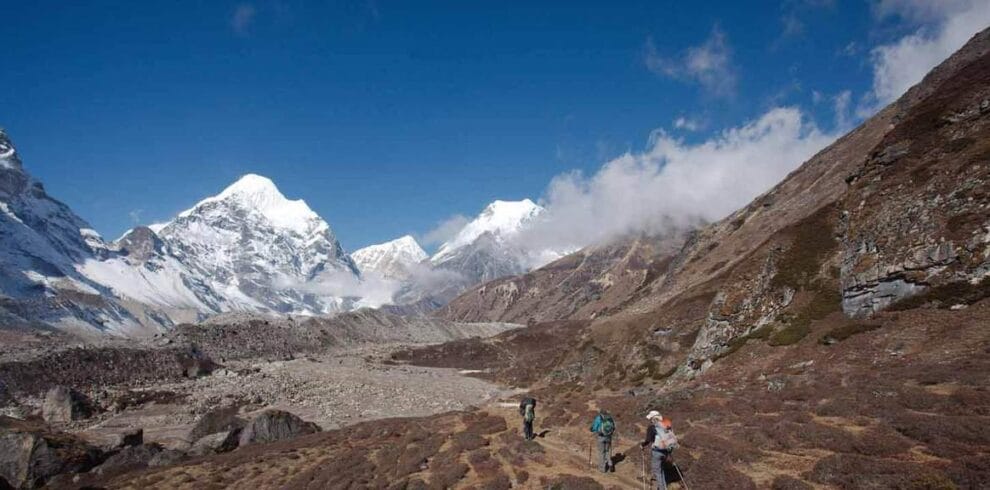
A remote, uncrowded tea-house trek over Shipton La into the Barun Valley, to the foot of Mt Makalu, the world's fifth-highest mountain.
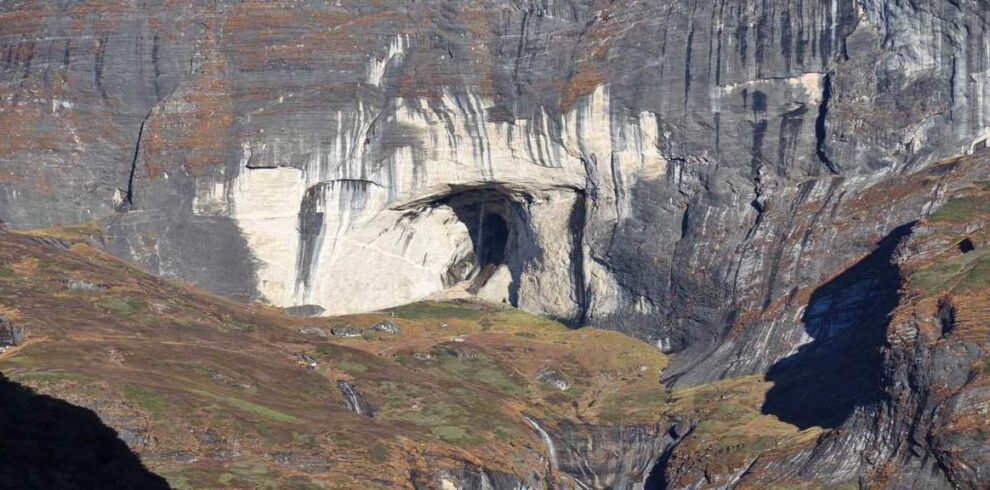
A sacred Himalayan journey beneath Makalu to the holy Shiva Dhara waterfall and Parbati cave, through Sherpa and Rai villages.
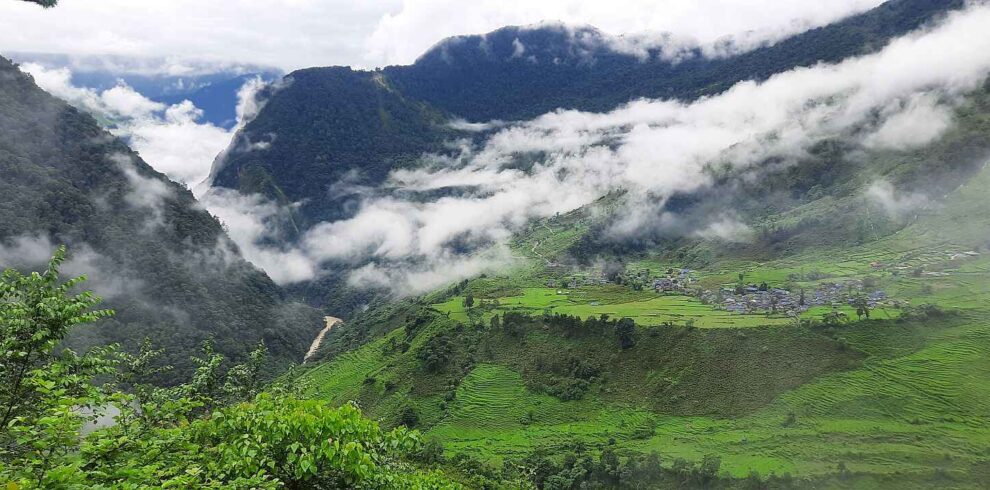
A peaceful, uncrowded trail up the Arun Valley to Kimathanka on the Tibet border, with Hatiya hot springs, Bhote villages, waterfalls and views of Makalu and Chamlang.